Book Appointment Now


How to Partner with an NGO in Tanzania: A CSR Guide
For companies operating in Tanzania, or looking to give back to Tanzanian communities, partnering with a local NGO is one of the most effective ways to turn corporate social responsibility goals into real, lasting change. A well-chosen partner brings local knowledge, community trust and on-the-ground delivery capacity that most companies cannot build on their own. The difference between a partnership that delivers and one that disappoints usually comes down to three things: choosing the right organisation, structuring the work clearly, and measuring what actually changed.
Why Companies Should Partner with NGOs in Tanzania for CSR Success
Corporate social responsibility works best when it goes beyond one-off donations. When a company decides to partner with an NGO in Tanzania, it gains a structured way to invest in communities while supporting its own values, reputation and stakeholder relationships.
Local NGOs understand the communities they serve. They know which schools need support, which villages lack clean water and which families face the greatest barriers. This knowledge means your CSR budget reaches the right places instead of being spread thin on guesswork.
Partnerships also build genuine credibility. Stakeholders, from customers to employees to regulators, increasingly expect companies to demonstrate real community impact. A documented partnership with a registered Tanzanian NGO, with reported outcomes, carries far more weight than an annual donation with no follow-up.
Finally, NGOs in Tanzania often operate in areas where companies already have a presence. If your business employs local staff, sources materials locally or serves Tanzanian customers, investing in those same communities is simply good business. Healthy, educated communities produce skilled workers, loyal customers and stable operating environments.
Understanding the Role of Community-Based NGOs in Tanzania’s Development
Tanzania has a strong tradition of community-based organisations working in education, health, community development and environmental conservation. These NGOs fill gaps that government programmes cannot always reach, particularly in rural and underserved areas.
How Local NGOs Connect Businesses with Real Community Needs
A community-based NGO acts as a bridge between your company’s resources and the people who need them most. Instead of your team trying to identify worthy projects from a distance, the NGO brings verified needs: a school that needs learning materials, a community that needs health awareness training, or a youth group that needs vocational skills support.
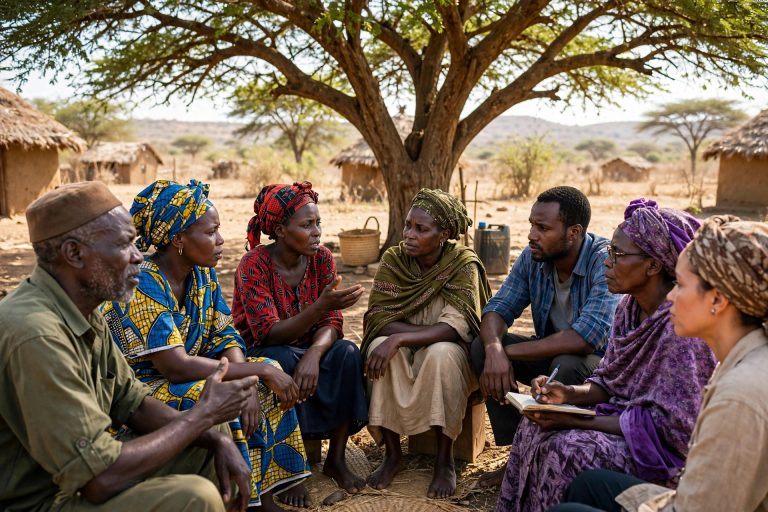
This connection works because local NGOs are embedded in the communities they serve. They attend community meetings, work with local leaders and understand cultural context. When you partner with an NGO in Tanzania that has this kind of grounding, your company’s contribution lands where it is genuinely needed, not where it merely looks good on a report.
The NGO also handles delivery. It can run training sessions, distribute resources, monitor progress and report back to you. Your company provides funding, expertise or volunteers, and the NGO converts those inputs into community outcomes.
The Advantages of Working with Grassroots Organisations
Grassroots organisations offer several advantages over larger international charities when it comes to local partnerships. They tend to have lower overheads, which means more of your contribution reaches the community. They are agile, able to respond quickly to changing needs. And they are trusted by the people they serve, which makes programmes more effective.
Working with a grassroots NGO also gives your partnership a clearer story. It is easier to show employees and stakeholders exactly where their support went, who it helped and what changed. That clarity strengthens your CSR reporting and your internal engagement.
That said, smaller organisations may have limited capacity in areas like financial reporting or programme documentation. This is a challenge to manage through clear agreements, not a reason to avoid them. Many grassroots NGOs welcome partnerships partly because they build the organisation’s own capacity.
How to Choose the Right NGO Partner in Tanzania for Your CSR Goals
Choosing the right partner is the single most important decision in any CSR partnership. A mismatch in values, capacity or expectations can undermine even the most generous commitment. Take time to evaluate carefully before signing anything.
Evaluating NGO Experience, Transparency, and Community Impact
Start with basic due diligence. Check that the organisation is properly registered in Tanzania. Registered NGOs in Tanzania are listed with the relevant government registrar, and a legitimate organisation should be able to share its registration details without hesitation.
Look for transparency in how the NGO describes its work. Does its website or documentation explain its mission, its programmes and its leadership? Can it show evidence of past projects, such as project reports, community testimonials or photos from the field? An organisation that is open about its work is more likely to be open about how your funds are used.
Ask about financial practices. How does the NGO budget for projects? Who oversees spending? Will it provide regular financial reports on your partnership? These are fair questions, and a professional NGO will welcome them.
Finally, assess community impact. Ask the NGO to describe specific outcomes from its past work, not just activities. There is a difference between “we held ten workshops” and “teachers in three villages now use the literacy methods we introduced.” Outcomes matter more than activities. You can also ask for references from other partners or donors who have worked with the organisation.
Aligning NGO Programs with Your Company’s CSR Strategy
A strong partnership aligns with what your company already cares about. If your business operates in agriculture, a community development programme supporting rural livelihoods may be a natural fit. If you employ many young people, education and skills training programmes may resonate with your workforce.
Review the NGO’s current programmes and identify overlap with your CSR priorities. The best partnerships feel coherent: the company’s mission and the NGO’s work reinforce each other rather than sitting in separate worlds.
Also consider geography. Partnering with an NGO that works in communities near your operations, offices or employee base creates opportunities for staff involvement and makes site visits practical. Proximity also means your company’s contribution is visible to the people who matter most to your business.
Be honest about scale. If your CSR budget is modest, that is fine, but choose a partner and a project size where your contribution is meaningful rather than symbolic. A smaller, focused project with a grassroots NGO often produces more visible impact than a small slice of a large programme.
Different Partnership Models for Companies Working with NGOs in Tanzania
There is no single right way to partner with an NGO in Tanzania. Different models suit different budgets, timelines and levels of involvement. Here are the most common approaches.
Financial Support and CSR Sponsorship Partnerships
The simplest model is financial support: your company funds a specific project or programme run by the NGO. This might be a school support initiative, a community health awareness campaign or an environmental conservation project.
Project sponsorship works well when the scope is clearly defined. Agree in advance on what the funds will cover, what outcomes are expected and how progress will be reported. A written agreement protects both sides and sets the partnership on a professional footing.
Some companies prefer ongoing sponsorship, such as an annual commitment to a programme. This gives the NGO planning stability and lets your company build a deeper relationship with the community over time. If you are also exploring direct giving options, our guide on how to donate to charity in Tanzania covers safe and trusted giving approaches that complement corporate partnerships.
Employee Engagement, Volunteering, and Skills-Based Support
Financial support is valuable, but it is not the only thing companies can offer. Employee volunteering programmes, where staff contribute time to NGO projects, build team morale while delivering real help to communities.
Skills-based volunteering goes further. A company with expertise in areas like marketing, accounting, IT or logistics can help an NGO strengthen its own operations. This kind of support is often deeply appreciated by smaller organisations that cannot afford professional services.
Consider also mentoring and training. If your company has specialists in areas relevant to the NGO’s work, short training sessions or ongoing mentorship can build lasting capacity. This model works particularly well when your employees are based in Tanzania and can engage directly with the community.
Long-Term Strategic Community Development Partnerships
The most ambitious model is a long-term strategic partnership focused on community development. Instead of funding a single project, your company commits to a multi-year relationship aimed at sustained change in a community or programme area.
These partnerships typically involve joint planning: the company and the NGO agree on shared goals, a multi-year timeline and regular review points. The company may combine funding with employee engagement, technical support and advocacy. The NGO provides community access, programme delivery and local expertise.
Long-term partnerships require more commitment but deliver deeper results. They allow programmes to mature, communities to take ownership and outcomes to compound over time. For more on what sustained community work looks like, see our practical guide to community development in Tanzania.
How Rafiki Elimu Society Represents a Community-Focused NGO Partnership Approach
Rafiki Elimu Society is a Tanzanian community-focused NGO working in education support, community health, community development and environmental conservation. Its approach illustrates what companies should look for in a local partner.
The organisation is community-led, meaning its programmes are shaped with the communities it serves rather than imposed from outside. For a corporate partner, this matters because community-led programmes tend to be more sustainable: when local people help design a project, they are more likely to maintain it after the funding period ends.
Rafiki Elimu Society works across connected programme areas, which gives partners flexibility. A company focused on education can support learning initiatives. One concerned with health can support community health awareness. A partner with broader goals can support an integrated programme spanning education, health and livelihoods.
The organisation is also open to different partnership models, from project sponsorship to employee engagement to long-term collaboration. For companies looking to partner with an NGO in Tanzania, this flexibility makes it easier to design a partnership that fits the company’s budget, timeline and CSR priorities.
Building an Effective CSR Partnership Framework with a Tanzanian NGO
Good intentions are not enough. A partnership needs a clear framework so that both sides know what to expect, what is expected of them and how success will be judged.
Setting Shared Goals and Clear Partnership Expectations
Begin by agreeing on shared goals in writing. What is the partnership trying to achieve? Who benefits? Over what timeframe? Vague goals like “support education” lead to vague results. Specific goals like “provide learning materials and teacher training support to ten schools over two years” give everyone something concrete to work towards.
Define roles clearly. What will the company provide: funding, volunteers, expertise, equipment? What will the NGO deliver: programme implementation, community engagement, monitoring, reporting? Put this in a simple partnership agreement or memorandum of understanding.
Agree on communication rhythms. Monthly or quarterly updates keep the partnership visible and allow problems to be caught early. Decide who the main contacts are on each side so that communication does not depend on a single person.
Set expectations about recognition. Most companies want some visibility for their CSR work, and most NGOs are happy to acknowledge partners. Agree in advance on how the partnership will be communicated publicly, including logo use, social media mentions and press coverage. This avoids misunderstandings later.
Creating Sustainable Programs Beyond Short-Term Donations
The best CSR partnerships outlast the funding period. When designing a programme with your NGO partner, ask how the community will sustain the benefits after your direct involvement ends.
Sustainability can take many forms. A school support programme might train local teachers so that improved methods continue after the project ends. A livelihood programme might help community members build income-generating skills that persist independently. An environmental project might establish community management structures that continue the work.
Involve the community from the start. Programmes designed with community input are more likely to be maintained by the community. Your NGO partner should be able to describe how local people are involved in planning, not just receiving.
Plan for transitions. If your partnership has a fixed term, discuss from the beginning what happens at the end. Will the NGO continue the programme with other funding? Will the community take over? A clear transition plan is a sign of a mature, responsible partnership.
Measuring the Impact of Your NGO Partnership in Tanzania
Measurement turns a partnership from a good story into a credible one. It also helps both sides learn and improve. Agree on how impact will be measured before the programme begins, not after it ends.
Key CSR Impact Metrics Companies Should Track
Choose metrics that reflect real change, not just activity. Useful metrics depend on the programme, but common examples include:
- Reach: how many people directly benefited from the programme (students supported, community members trained, households reached).
- Outcomes: what changed as a result (improved school attendance, new skills acquired, health awareness adopted).
- Sustainability: what continues after the project period (trained teachers still using new methods, community groups still active).
- Engagement: how your own employees participated (volunteer hours, skills contributed, staff satisfaction with the programme).
Keep the metric set focused. Five to eight well-chosen indicators are more useful than thirty that nobody tracks properly. Your NGO partner can help select realistic measures based on its experience.
Ask for baseline data where possible. Knowing the starting point, such as school attendance before and after a programme, makes the change visible and credible. Where baseline data is not available, qualitative evidence like community testimonials and case observations still adds valuable context.
Reporting Community Outcomes to Stakeholders
Regular reporting keeps the partnership accountable and gives your company material for CSR communications. Agree with your NGO partner on a reporting schedule and format: quarterly summaries, an annual impact report or a combination.
Good reports combine numbers with stories. Statistics show scale; individual stories show meaning. A report that says “500 students received learning materials” is informative. One that adds a teacher’s account of how the materials changed classroom practice is memorable.
Use reports internally as well as externally. Share results with employees who volunteered or contributed. Recognition strengthens internal engagement and builds support for future CSR commitments.
Be honest about challenges. Not every programme goes perfectly, and credible reporting acknowledges difficulties alongside successes. Stakeholders trust companies that report transparently more than those that only share good news.
Common Challenges When Partnering with NGOs in Tanzania and How to Overcome Them
Even well-planned partnerships encounter difficulties. Knowing the common challenges in advance helps you handle them calmly.
Communication gaps are the most frequent issue. Companies and NGOs sometimes operate on different timelines and with different assumptions. The fix is regular, structured communication: scheduled check-ins, clear points of contact and written summaries of decisions.
Capacity constraints can affect smaller NGOs. Your partner may be excellent at community work but stretched thin on reporting or administration. Rather than treating this as a failure, consider whether your company can help: skills-based support, a small capacity-building budget or simply realistic reporting expectations.
Cultural and contextual differences matter. Business timelines and NGO programme cycles do not always align. Harvest seasons, school terms and community events all shape when things can happen. A good local partner will flag these; a good corporate partner will listen.
Expectation mismatches arise when goals were never clearly defined. This is why written agreements matter. If expectations drift, return to the original agreement and renegotiate openly rather than letting frustration build.
Finally, short time horizons can limit impact. Community change takes time. If your company can commit to multi-year partnerships rather than annual projects, the results will usually be deeper and more sustainable.
FAQ: Partnering with NGOs in Tanzania for Corporate Social Responsibility
What are the benefits of partnering with an NGO in Tanzania?
Partnering with an NGO in Tanzania gives your company local expertise, community trust and delivery capacity that would be difficult to build independently. Benefits include more effective use of your CSR budget, credible impact reporting for stakeholders, stronger community relationships near your operations and meaningful engagement opportunities for employees.
How can a company find a trusted NGO partner in Tanzania?
Start by defining your CSR goals and the type of programme you want to support. Then research registered Tanzanian NGOs working in that area. Check registration details, review past project evidence, ask for financial transparency and speak to other partners or donors. Visiting the NGO and its project sites in person, where possible, is one of the best ways to build confidence. Our overview of education NGOs in Tanzania is a useful starting point if education is your focus.
What types of CSR projects can companies support through NGOs in Tanzania?
Companies can support a wide range of projects, including education support and school resources, community health awareness, youth skills training, women’s empowerment initiatives, environmental conservation and community infrastructure. The right project depends on your company’s values, budget and the needs of the communities you want to serve. Partnership models range from one-off project sponsorship to employee volunteering to long-term strategic collaboration.
How do companies measure the success of NGO partnerships?
Success is measured through agreed indicators tracked over the partnership period. Useful measures include the number of people reached, concrete outcomes such as improved school attendance or new skills acquired, the sustainability of benefits after the project ends and employee engagement levels. Regular reports combining statistics with community stories give stakeholders a complete and credible picture of impact.
Start Your Partnership Journey
If your company is ready to partner with an NGO in Tanzania, the next step is a conversation. Rafiki Elimu Society welcomes partnership enquiries from companies that share its commitment to empowering communities through education, health and sustainable development. Visit rafikielimu.or.tz to learn more about its programmes and start a partnership conversation today.
Find out more about partnering with Rafiki Elimu Society.
Useful resource: the UN Global Compact sets out principles for responsible business and partnerships.