Book Appointment Now

Community Development in Tanzania: A Practical Guide
Community development in Tanzania is the steady, community-led work of helping villages and towns improve their own lives: better schools, healthier families, stronger incomes, and a cleaner environment. It is not charity handed down from above. At its best, community development Tanzania programmes put local people in charge, listen to what they actually need, and build solutions that last long after the initial support ends.
In practice, it looks like villages setting their own priorities, then connecting education, health, livelihoods and the environment into one plan that outlasts any single project. Here is how that works across Tanzania, and where you fit in, whether you are a student, a volunteer, a donor, or simply curious about how change happens on the ground.
Understanding Community Development in the Tanzanian Context
To understand why community development matters so much here, it helps to look at how it works in practice across the country.
What Community Development Means for Tanzanian Communities
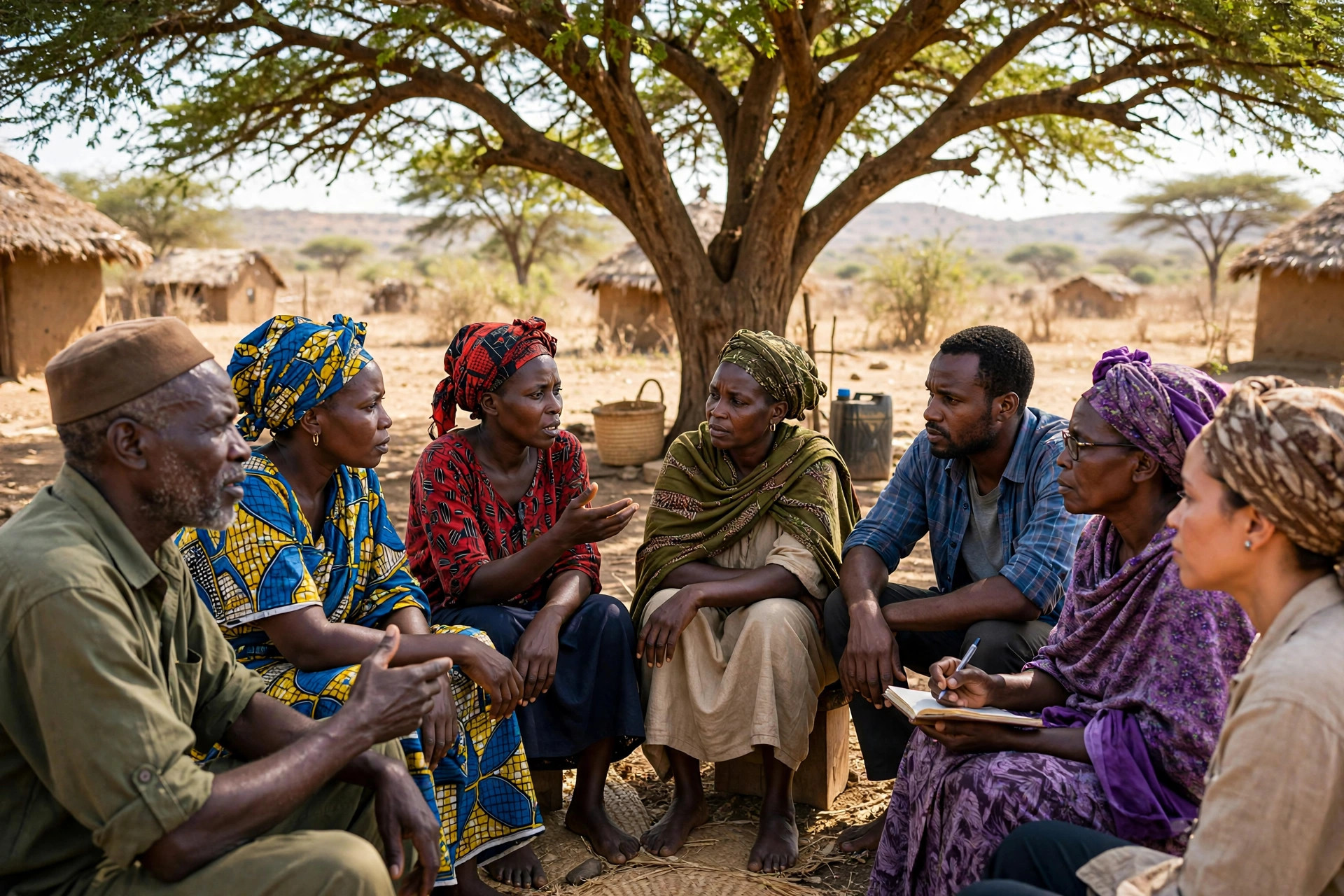
Community development is a way of working with people, not for them. In Tanzania, it usually means a structured effort in which residents of a village, ward, or neighbourhood identify their most pressing problems, plan solutions together, and take action with support from local government, non-governmental organisations, or development partners.
A community development project might help a village build a reliable water point, support mothers to start small businesses, or train young people in practical skills. The common thread is that the community itself shapes the work. Outsiders can bring resources, training, and ideas, but local residents bring the knowledge of their own needs and the commitment that keeps a project alive.
This approach stands in contrast to top-down aid, where decisions are made far away and delivered without consultation. Experience across Tanzania has shown again and again that projects designed with the community tend to survive, while projects imposed on the community tend to fade.
The Role of Local Participation and Community Ownership
Participation is the engine of community development. When people take part in planning a project, they understand it, they trust it, and they maintain it. Village meetings, community committees, and local leadership structures all play a part in making sure development reflects real priorities rather than assumptions.
Community ownership goes one step further. It means the community feels the project belongs to them. A water committee that collects small contributions for repairs, a parents’ group that manages a school feeding effort, or a youth cooperative that runs a small enterprise are all examples of ownership in action. When people own the work, they protect it, improve it, and pass it on.
For organisations working in this space, including Rafiki Elimu Society, the practical test of any project is simple: if outside support ended tomorrow, would the community keep it going? Projects that pass that test are the ones worth building.
Why Community Development Matters for Tanzania’s Future
Tanzania is a young and growing country, and much of its population lives in rural areas where public services can be thin. Community development fills the gaps between what the state can provide and what people need today. It turns waiting into action.
It also matters because development is not only about economics. A community that learns to organise itself, solve problems together, and hold its leaders to account becomes stronger in every sense. Children grow up seeing that change is possible. Young people find reasons to stay and build rather than leave. Over time, these small shifts add up to a more resilient and self-reliant society.
Key Focus Areas of Community Development Programs in Tanzania
Most community development programmes in Tanzania work across four connected areas. Progress in one area tends to reinforce progress in the others.
Education Support and Skills Development
Education is often the starting point. Programmes in this area help children stay in school, support teachers with training and materials, and create learning opportunities for young people who missed out on formal schooling. Skills development, from tailoring and carpentry to digital literacy, gives youth and adults practical ways to earn a living.
When a community invests in learning, the effects spread widely. Educated young people make better health decisions, start stronger businesses, and take part more actively in community life.
Community Health and Well-Being Initiatives
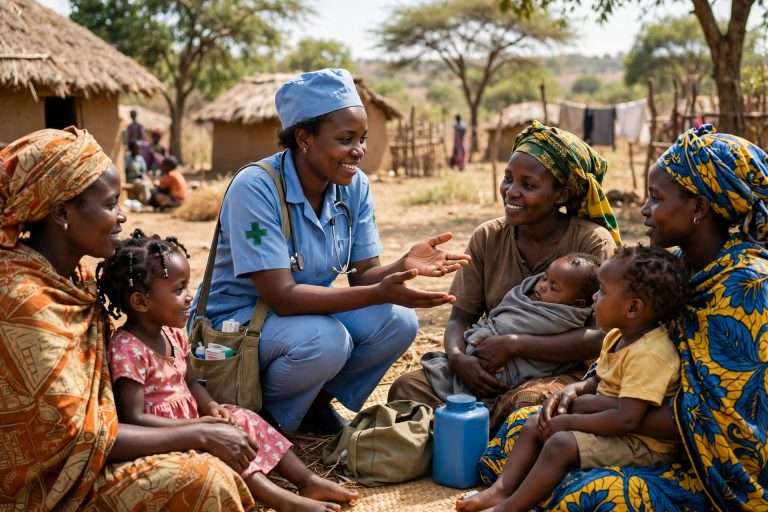
Health is the foundation everything else rests on. Community health initiatives focus on prevention and awareness: hygiene education, nutrition guidance, maternal and child health support, and campaigns against preventable disease. Community health workers, trained from within the community, are often the most trusted messengers.
A healthier community is a more productive one. Children attend school more regularly, adults lose fewer working days, and families spend less of their income on treating avoidable illness.
Livelihood Improvement and Economic Empowerment
Poverty is one of the biggest barriers to development, so many programmes focus directly on helping people earn more and manage money better. This can mean supporting smallholder farmers with better techniques, helping women’s groups start savings schemes, or training young people to launch micro-enterprises.
The goal is not just higher income, but economic resilience: the ability to withstand a bad harvest, a medical emergency, or a sudden expense without falling back into crisis.
Environmental Protection and Sustainable Practices
Tanzania’s natural resources, its forests, water, soil, and wildlife, are both an asset and a responsibility. Community development programmes increasingly include environmental work: tree planting, waste management, clean energy for cooking, and education about climate change. Protecting the environment protects livelihoods, because so many Tanzanian families depend directly on the land.
How Education Programs Strengthen Community Development in Tanzania
Education and community development reinforce each other in powerful ways. A community that learns together develops together.
Improving Access to Quality Learning Opportunities
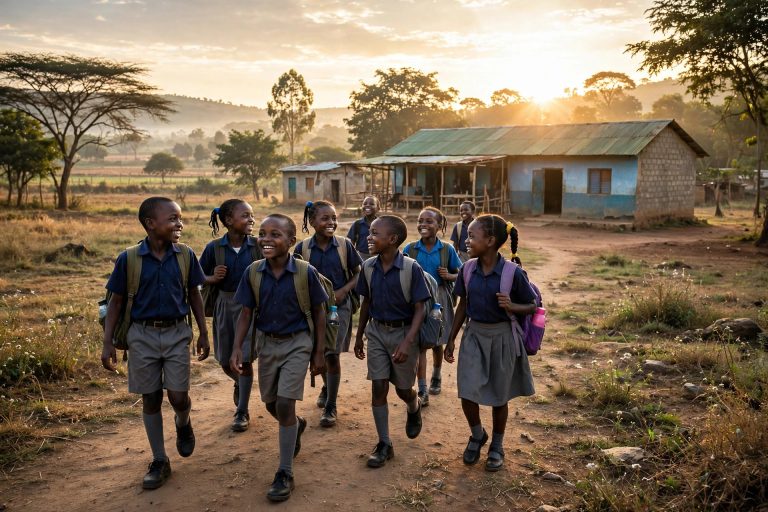
Access remains the first hurdle. In some areas, children walk long distances to reach a classroom, or families struggle with the costs of uniforms, books, and supplies even where tuition is free. Community development programmes respond by working with parents, schools, and local leaders to keep children enrolled and learning.
Quality matters as much as access. Teacher training, learning materials, and safe, well-maintained classrooms all help children actually learn, not just attend. Communities that get involved in school management, through parent committees and regular dialogue with teachers, often see real improvements in results.
You can read more about this in our guide to education support in Tanzania, which looks at the challenges and the programmes making a difference.
Supporting Children, Youth, and Vulnerable Groups
Good community development pays special attention to those most likely to be left behind: girls, children with disabilities, orphans, and young people from the poorest households. Targeted support, such as mentoring, scholarships, or safe learning spaces, helps these groups benefit from opportunities that others take for granted.
Youth deserve particular focus. With so many young Tanzanians entering the job market each year, programmes that combine education with practical skills give them a genuine path forward. When young people see a future in their own community, the whole community becomes more stable and hopeful.
The Importance of Health Initiatives in Tanzanian Community Programs
Health work is often the most immediately visible part of community development, because its results can be felt within weeks or months.
Promoting Preventive Healthcare and Awareness
Prevention is cheaper and more effective than treatment. Community programmes teach practical habits: handwashing with soap, safe water storage, balanced nutrition for children, and the importance of antenatal care for expectant mothers. These messages work best when delivered by people the community already trusts, in the local language, and repeated over time.
Awareness campaigns also tackle harmful practices and misinformation. When communities understand how diseases spread and how they can be prevented, they protect themselves without waiting for outside help.
Our article on community health programs in Tanzania explores how these efforts are changing rural communities.
Building Healthier and More Resilient Communities
Resilience means a community can absorb shocks. A village with trained health volunteers, a functioning referral link to the nearest clinic, and families who know the danger signs in pregnancy and childhood illness is far better prepared for emergencies than one without.
Health initiatives also build social capital. Health committees, mothers’ groups, and volunteer networks create relationships and habits of cooperation that carry over into every other area of community life. People who have organised a vaccination drive together find it easier to organise a school repair or a savings group.
Creating Sustainable Livelihoods Through Community Development Projects
Lasting development needs lasting incomes. Livelihood projects aim to help people earn a living in ways that are stable, dignified, and sustainable.
Supporting Local Entrepreneurship and Income Generation
Small businesses are the backbone of local economies. Community development programmes support entrepreneurs with business training, start-up guidance, and sometimes small grants or loans through group savings schemes. Women’s groups are often the most active participants, running everything from food processing to tailoring to small retail shops.
The most effective support respects what people already know. A farmer who has grown maize for twenty years does not need a lecture on farming; she needs access to better seed, fair prices, and perhaps a way to process her crop for extra value. Good programmes build on existing skills rather than replacing them.
Developing Skills for Long-Term Economic Growth
Skills training works best when it matches real demand. Programmes that survey local markets before choosing which trades to teach, whether that is masonry, solar installation, hairdressing, or computer skills, produce graduates who actually find work. Apprenticeships with local artisans and businesses can be more valuable than classroom training alone.
For young people, the combination of literacy, numeracy, and a marketable skill is transformative. It opens doors to formal employment, makes self-employment viable, and builds the confidence to plan for the future.
Environmental Sustainability as a Key Part of Community Development Tanzania
The environment is not a separate issue from development. In Tanzania, it is development, because so many livelihoods depend on natural resources.
Protecting Natural Resources Through Community Action
Community-led conservation is one of the most promising approaches. Village forest reserves, community water management, and locally enforced rules against destructive practices all show that people protect what they benefit from. When a community manages its own forest or water source, it has a direct stake in keeping it healthy.
Tree planting deserves a special mention. Beyond the environmental benefits, community tree nurseries and planting campaigns create income, provide fruit and timber, and bring people together around a shared, visible goal.
Encouraging Climate Awareness and Green Practices
Climate change is already affecting Tanzanian communities through unpredictable rains, longer dry spells, and pressure on water sources. Community development programmes help people understand these changes and adapt: drought-tolerant crops, rainwater harvesting, efficient cooking stoves that use less firewood, and diversified income sources that do not all depend on the weather.
Green practices also save money. A household that spends less on charcoal or firewood, or a farmer who preserves soil moisture with simple techniques, keeps more of what it earns. Sustainability and prosperity point in the same direction.
Lessons from Successful Tanzanian Community Programs
Across the country, certain patterns separate the programmes that thrive from those that fade. These lessons are worth stating plainly.
First, listen before acting. Programmes that begin with genuine community consultation, through village meetings and conversations with women, youth, and elders, start with the right priorities. Second, start small and grow. A pilot project that proves itself earns trust and can be expanded; a grand plan that fails on day one is hard to revive. Third, measure and learn. Programmes that track their results honestly, admit what is not working, and adjust accordingly improve over time.
How Organizations Like Rafiki Elimu Society Support Community Transformation
Rafiki Elimu Society works from the belief that communities themselves are the primary agents of change. Its approach to community development brings together education support, health awareness, and community empowerment under one community-led philosophy. Rather than running isolated projects, the organisation looks for the connections: how better learning supports better health, how healthier families build stronger livelihoods, and how all of it depends on a protected environment.
This integrated way of working reflects a wider truth in Tanzanian development. The most effective organisations are not those with the biggest budgets, but those that stay close to communities, earn trust over time, and help local people lead.
The Value of Partnerships Between Communities, NGOs, and Supporters
No single actor can do community development alone. Communities bring local knowledge and commitment. NGOs bring technical expertise, training, and connections. Donors and partners bring resources. Local government brings legitimacy and scale. When these roles complement each other rather than compete, the results are far greater than the sum of the parts.
Good partnerships are built on respect and honesty. Supporters who ask what communities need, rather than deciding for them, and organisations that report back transparently on how resources are used, create the trust that long-term development requires.
If your company is interested in this kind of collaboration, our guide on how to partner with an NGO in Tanzania explains the practical steps.
How Donors, Volunteers, and CSR Partners Can Support Community Development in Tanzania
Community development needs people, not just funding. There are meaningful ways to contribute whatever your situation.
Opportunities for International Volunteers and Development Partners
Volunteers can make a real difference when their skills match a genuine need. Teachers, health workers, engineers, and business mentors are often in demand. The key is to work through established local organisations that can place you where you are truly useful, and to come with a learning mindset rather than a rescue mindset.
Development partners, including foundations and international agencies, can support community development by funding local organisations directly, trusting their judgement, and committing for the long term. Short, unpredictable funding cycles make it hard to build anything lasting.
Building Effective and Responsible Community Partnerships
Whether you are an individual donor or a corporate partner, a few principles make your support more effective. Give to organisations with a clear track record and transparent reporting. Prefer long-term commitments over one-off gifts. Ask how the community is involved in decisions, not just how many people were reached. And remember that the best development is often quiet and gradual: a child staying in school, a mother growing her business, a village managing its own water. These are the victories that matter.
Frequently Asked Questions About Community Development Tanzania
What is community development in Tanzania?
Community development in Tanzania is the process by which communities work together, often with support from NGOs, local government, or development partners, to improve their social, economic, and environmental well-being. It covers education, health, livelihoods, and environmental protection, and it works best when local people lead the planning and decision-making.
What are the main areas of community development programs in Tanzania?
The main areas are education support and skills development, community health and well-being, livelihood improvement and economic empowerment, and environmental protection and sustainability. Effective programmes usually work across several of these areas at once, because progress in one area supports progress in the others.
How can international donors support community development projects in Tanzania?
International donors can support community development by giving to reputable Tanzanian organisations with transparent reporting, choosing long-term commitments over one-off donations, and funding community-led priorities rather than imposing their own. Supporting local NGOs directly, rather than only through intermediaries, often puts more resources into the hands of the communities themselves.
How can volunteers contribute to Tanzanian community programs?
Volunteers contribute most effectively when their skills match a real local need and they work through established organisations. Teachers, health workers, and skilled professionals are often valuable. The most important qualities are humility, cultural respect, and a willingness to learn from the community. Short visits can help, but longer commitments usually achieve more.
If this guide has inspired you, consider getting involved. Visit rafikielimu.or.tz to learn about Rafiki Elimu Society’s programmes, volunteer opportunities, and ways to support community development across Tanzania. Stronger communities are built together.
Find out more about our community development work in Tanzania.
Useful resource: UNDP Tanzania works on sustainable development and livelihoods across the country.