Book Appointment Now

Education Support in Tanzania: 7 Ways It Changes Lives
Education support in Tanzania is about far more than classrooms and textbooks. For millions of children across the country, the journey to a good education is shaped by where they are born, what their families can afford, and how far they must walk to reach the nearest school. Yet across Tanzania, a growing movement of community organisations, local NGOs, donors and volunteers is working to change this picture, one learner at a time.
The challenges are concrete: crowded classrooms, long walks to school, and families forced to choose between fees and food. The responses are concrete too, from learning materials and teacher support to community-led school programmes. Here is what is working, and how you can help, whether you live in Tanzania or on the other side of the world.
Understanding the Education Challenges Facing Tanzania Today
Tanzania has made real progress in expanding access to schooling over the past two decades. Basic education is free in government schools, and enrolment at primary level is high. But getting children into school is only the first step. Keeping them there, and making sure they actually learn while they are there, is a much harder challenge, particularly in rural and low-income communities.
Barriers to Quality Education for Children in Tanzania
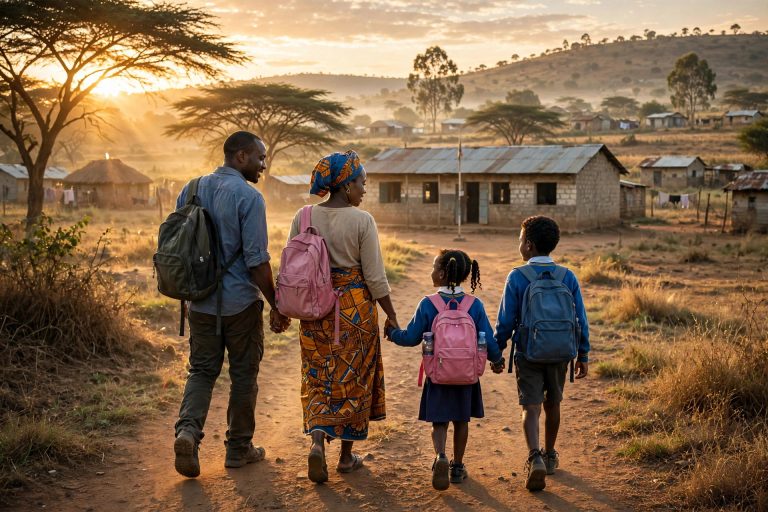
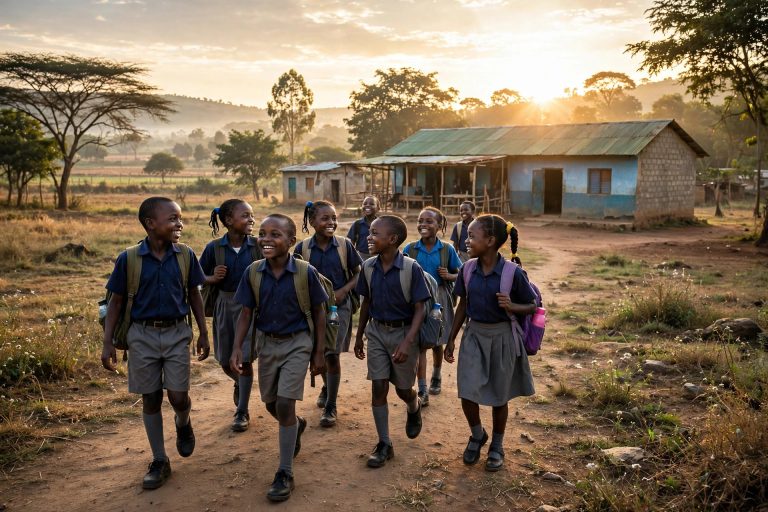
Many children in Tanzania begin their schooling with enthusiasm but face obstacles that make learning difficult. In rural areas, the distance between home and school can be long, and the journey may not always be safe, especially for young girls. Classrooms in some schools are overcrowded, with a single teacher managing far more pupils than one person can reasonably support.
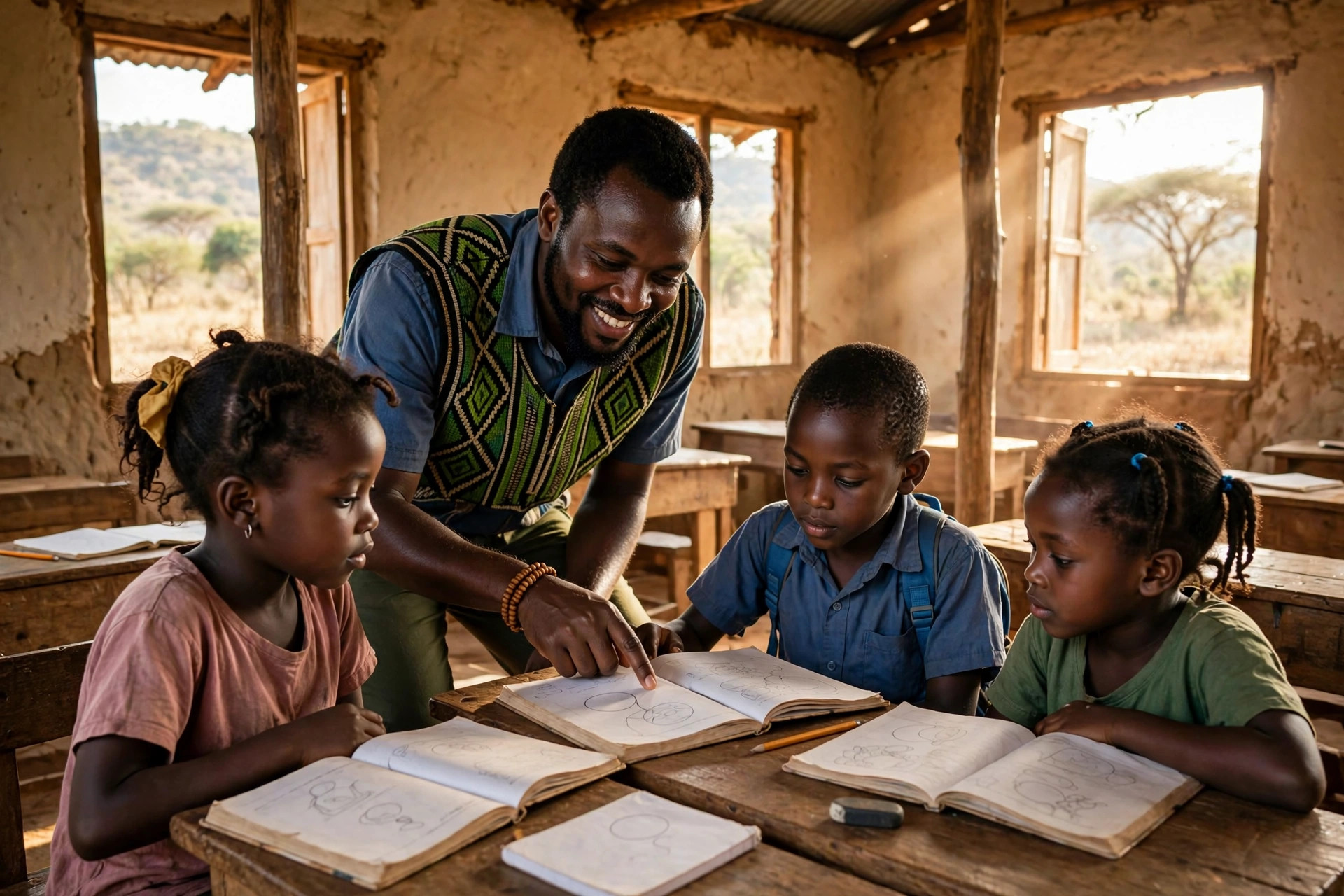
Learning materials are another barrier. Textbooks, exercise books, pencils and basic supplies are not always available in sufficient quantities. When several children share one worn textbook, following a lesson becomes an exercise in patience rather than learning. For families already struggling with daily expenses, even the cost of a school uniform or exam fees can be enough to keep a child at home.
Language also plays a role. In Tanzania, children typically begin their education in Kiswahili and later transition to English as the medium of instruction at secondary level. For learners who have had limited exposure to English, this transition can be abrupt and discouraging, and it is one of the points where many students begin to fall behind.
The Impact of Poverty, Resources, and Infrastructure on Learning
Poverty touches every part of a child’s education. A child who arrives at school hungry finds it hard to concentrate. A family that depends on a child’s labour at home or in the fields may keep them out of school during planting or harvest seasons. Girls in particular may be kept home to care for younger siblings or to help with household work.
School infrastructure tells the same story. Some schools operate with classrooms that need repair, too few desks, and no reliable access to clean water or sanitation. Without separate, safe latrines for girls, older girls may miss school days each month or drop out altogether. These are not small inconveniences. They are structural barriers that quietly decide which children finish school and which do not.
Teacher shortages compound the problem. In remote areas, it can be difficult to attract and retain qualified teachers. When a school has too few teachers, subjects are dropped, classes are merged, and the quality of instruction declines. Children in these schools work just as hard as children anywhere else, but they start from further behind.
Why Education Support Is Essential for Long-Term Development
Education is one of the most reliable paths out of poverty, not just for individuals but for whole communities. A child who completes school is better equipped to earn a living, make informed decisions about health and family, and contribute to the development of their community. The benefits ripple outward: educated parents are more likely to send their own children to school, creating a cycle of opportunity rather than a cycle of disadvantage.
For Tanzania, investing in education support is also an investment in the country’s future workforce, its public health, and its ability to build a more resilient economy. Education support programmes that reach the most vulnerable children do not just change individual lives. They strengthen the social and economic foundations of entire communities.
How Education Support Tanzania Programs Are Creating Change
Across the country, education support programmes are tackling these challenges from many angles. Some focus on getting children into school. Others focus on improving what happens once they are there. The most effective programmes tend to do both, working with families, teachers and community leaders to build lasting change.
Supporting Children Through School Access and Learning Opportunities
One of the most direct forms of education support is helping children who might otherwise never start school, or who are at risk of dropping out, to stay in learning. This can mean providing school uniforms, learning materials and basic supplies that remove the small financial barriers keeping children at home.
It can also mean supporting children through key transitions, such as the move from primary to secondary school, where costs rise and many learners, particularly girls, leave education behind. Programmes that offer scholarships, mentorship or simply encouragement at these critical moments can change the trajectory of a young person’s life.
Beyond formal schooling, education support also includes learning opportunities outside the classroom: reading clubs, tutoring for struggling learners, holiday learning programmes, and skills training for young people who have left school but still want to build a future. These programmes recognise that learning does not stop at the school gate.
If you are considering a more personal form of support, sponsoring a child’s education in Tanzania is one of the most direct ways to keep a vulnerable learner in school.
Strengthening Communities Through Sustainable Education Initiatives
The strongest education support programmes do not treat schools as isolated islands. They work with the whole community. When parents understand the value of education and are involved in school life, children attend more regularly and perform better. When community leaders champion girls’ education, cultural barriers begin to shift.
Sustainable initiatives also invest in the people who deliver education. Supporting teacher training, providing teaching resources, and helping schools develop better management practices all raise the quality of learning without depending on outside help forever. The goal is always the same: communities that can sustain and improve their own children’s education long after any single programme ends.
The Role of Local NGOs in Improving Education in Tanzania
International organisations play a part in Tanzania’s education landscape, but local NGOs bring something distinctive: deep roots in the communities they serve. They speak the local languages, understand local customs, and can navigate the realities of daily life in ways that outsiders cannot. This closeness makes their work more responsive and more trusted.
How Organisations Like Rafiki Elimu Society Support Vulnerable Learners
The organisation works with vulnerable children and communities in Tanzania to expand access to education support. Rather than imposing solutions from outside, it focuses on understanding what each community actually needs, whether that is learning materials, school support, encouragement for girls to stay in school, or connections to wider opportunities.
This kind of locally led work matters because the barriers to education are rarely identical from one community to the next. A programme designed with the community, rather than for it, is far more likely to address the real reasons children are missing school.
You can read more about the organisations doing this work in our guide to education NGOs in Tanzania.
Community-Based Approaches That Make Education Programs Effective
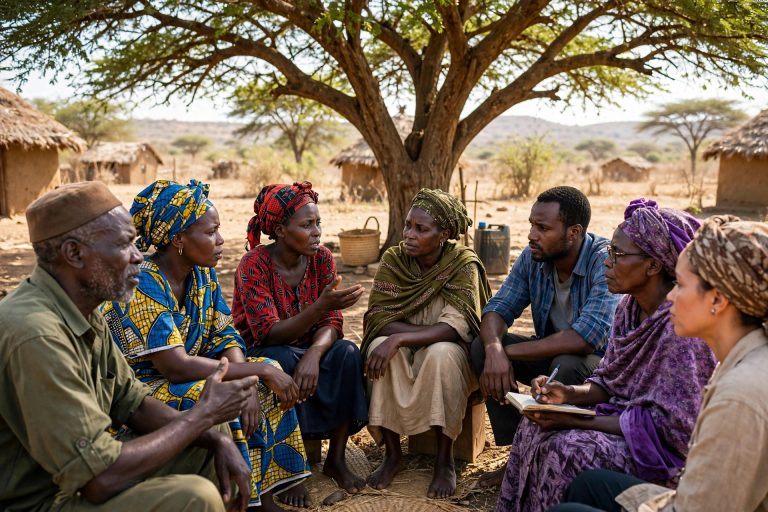
Community-based approaches share a few common strengths. They start by listening. They involve parents, teachers and local leaders in planning, so that programmes reflect local priorities rather than assumptions. They build on existing strengths, such as respected elders, active parent groups or motivated teachers, instead of starting from zero.
They also tend to be more resilient. When a programme belongs to the community, it survives changes in funding and staffing far better than one run entirely from outside. Community ownership is not just a nice idea. It is what makes education support last.
Key Education Initiatives Making a Difference Across Tanzania
Education support in Tanzania takes many forms, and the variety is itself a strength. School feeding programmes help children concentrate and give families one more reason to send their children to school each day. Girls’ education initiatives provide mentorship, safe spaces and sanitary products that help girls stay in class with confidence.
Teacher support initiatives focus on the other side of the classroom: training, mentoring and resources that help educators teach more effectively, even in difficult conditions. Literacy programmes reach children and adults who missed out on schooling, proving that it is never too late to learn.
Vocational and skills training programmes serve young people who have completed basic education, or who left school early, giving them practical abilities they can use to earn a living. These programmes connect education directly to livelihoods, which makes the value of learning visible to families weighing difficult choices.
Digital and distance learning efforts are also emerging, using mobile technology and community learning centres to reach learners in areas where schools are few. While technology is not a replacement for good teaching, it can extend learning opportunities to places that traditional schooling struggles to reach.
Why International Donors and CSR Partners Should Invest in Education Support Tanzania
Education is one of the most effective areas for philanthropic and corporate investment. Unlike many forms of aid, the returns on education compound over a lifetime and across generations. For international donors and companies with corporate social responsibility programmes, supporting education in Tanzania offers a chance to create deep, measurable and lasting impact.
Building Sustainable Impact Through Strategic Partnerships
The most effective partnerships in education support are built on shared goals and mutual respect. Rather than funding isolated projects, thoughtful donors and CSR partners work with local organisations to support programmes that communities themselves have identified as priorities.
This approach avoids the common pitfall of short-term projects that end when funding stops. When a company or donor commits to a multi-year partnership with a Tanzanian NGO, the organisation can plan properly, hire and train staff, and build programmes designed to last. Strategic partnerships also allow for learning and adaptation, so programmes improve over time instead of repeating the same mistakes.
For companies, education partnerships offer something beyond impact: a genuine connection to the communities where they operate or source, and a story of social responsibility grounded in real outcomes rather than slogans.
Measuring the Social and Community Benefits of Education Investment
Good education programmes track their progress honestly. This means looking beyond simple enrolment numbers to ask harder questions: Are children actually learning? Are girls staying in school through secondary level? Are graduates finding work or continuing their education?
Responsible organisations share these results openly with their partners and supporters, including the challenges and setbacks. This transparency builds trust and helps everyone involved, donors, companies and communities, make better decisions about where support is most needed. When you support education work, look for organisations that measure honestly and report openly. It is one of the clearest signs that your contribution will be used well.
How Volunteers Can Support Education Programs in Tanzania
Volunteers bring energy, skills and fresh perspectives to education programmes, and in return they gain a deeper understanding of the realities and strengths of Tanzanian communities. Volunteering in education is not about replacing local teachers. It is about supporting them and the learners they serve.
Opportunities for Teaching, Mentoring, and Community Engagement
Education volunteers in Tanzania may assist with English language practice, help run reading clubs or after-school activities, support computer literacy sessions, or mentor young people thinking about their futures. Those with professional skills, in areas such as curriculum development, teacher training or programme management, can contribute at an organisational level too.
Community engagement is equally valuable. Volunteers can help organise awareness campaigns about the importance of education, particularly girls’ education, or support community events that bring parents and schools closer together. These activities strengthen the social fabric around education, which is often as important as what happens in the classroom.
If this sounds like something you would like to do, our guide to volunteering in Tanzania covers what to know before you go, from choosing an ethical programme to preparing for the experience.
Ways Individuals Can Help Improve Education Access in Tanzania
You do not need to be a large donor or a company to make a difference. Individual supporters, acting alone or together, play a vital role in education support across Tanzania.
Donating Resources and Supporting Local Education Projects
Financial contributions to trusted local organisations remain one of the most effective ways to help. Even modest donations can cover the cost of school supplies, uniforms or learning materials for children who would otherwise go without. Regular monthly giving is especially valuable because it allows organisations to plan ahead with confidence.
Beyond money, some supporters contribute books, educational materials or professional expertise. Others organise fundraising among friends, schools or workplaces, multiplying their individual contribution through collective effort. What matters most is choosing a trustworthy organisation and giving in a way you can sustain.
Raising Awareness and Advocating for Equal Learning Opportunities
Not all support is financial. Sharing honest stories about education in Tanzania helps build a wider community of people who care. Writing about the issue, speaking about it, and directing others toward credible organisations all expand the circle of support.
Advocacy matters too. Supporting policies and campaigns that promote equal access to education, particularly for girls and children in remote areas, helps address the structural causes of educational inequality. Individual voices, joined together, can influence how resources and attention are directed.
The Future of Education Support Tanzania and Sustainable Growth
The future of education support in Tanzania will be shaped by how well programmes adapt to a changing country. Tanzania’s population is young and growing, which means demand for quality education will keep rising. Meeting that demand will require continued investment in teachers, schools and learning resources, alongside smarter approaches that reach the most excluded children.
Technology will play a growing role, from digital learning materials to better data on which children are being left behind. But technology works best when it supports, rather than replaces, the human relationships at the heart of learning: the teacher who encourages a struggling pupil, the mentor who shows a young person what is possible, the parent who insists that their daughter finishes school.
The most hopeful sign is the growing leadership of Tanzanian communities and organisations themselves. Education support that is designed, delivered and sustained locally is education support that lasts. International friends and partners have an important role to play, but the future belongs to the communities building it.
Frequently Asked Questions About Education Support Tanzania
What are the biggest education challenges in Tanzania?
The main challenges include overcrowded classrooms, shortages of qualified teachers in rural areas, limited learning materials, long distances to school, and the costs that families still face despite free basic education, such as uniforms and supplies. Girls and children from the poorest families are most affected. Language transition from Kiswahili to English at secondary level is another significant hurdle for many learners.
How can I support education programs in Tanzania from abroad?
You can donate to trusted Tanzanian NGOs working in education, sponsor a child’s schooling, volunteer your professional skills remotely or in person, fundraise among your own networks, or partner through a company CSR programme. The key is to choose organisations that work directly with local communities and report openly on how contributions are used.
What role do NGOs like Rafiki Elimu Society play in Tanzanian education?
Local NGOs like Rafiki Elimu Society work directly with vulnerable children and communities to expand access to education support. They provide learning materials and school support, encourage school attendance, particularly for girls, and build programmes around what communities actually need. Because they are rooted locally, their work tends to be responsive, trusted and sustainable.
How can companies support education through CSR partnerships?
Companies can fund education programmes through multi-year partnerships with Tanzanian NGOs, support teacher training or school infrastructure, offer employee volunteering or skills-based support, and sponsor scholarships or learning materials. The most effective CSR partnerships align with the company’s values, respond to genuine community needs, and measure their impact honestly.
Every child in Tanzania deserves the chance to learn, to dream, and to build a better future. Education support programmes across the country are making that chance real, but they cannot do it alone. If this guide has moved you, consider supporting the education work of Rafiki Elimu Society at rafikielimu.or.tz. Whether through a donation, a partnership or simply sharing this article, your support helps keep a child in school and a community moving forward.
Find out more about our education programmes in Tanzania.
Useful resource: the Global Partnership for Education supports education systems in partner countries including Tanzania.